
By NOL24 Political Desk
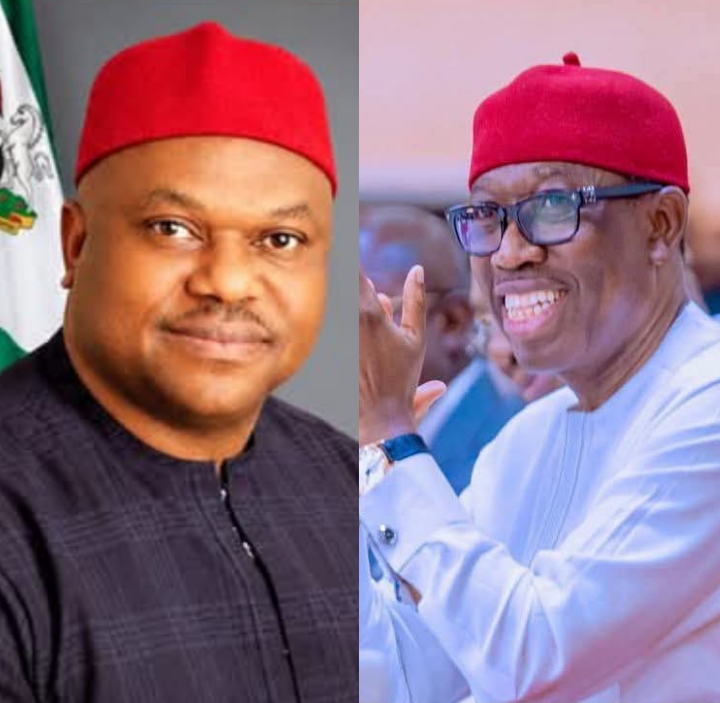
ASABA — The emerging contest for the Delta North Senatorial District in the 2027 general elections is beginning to take the shape of a contest between two political careers built in different arenas.
On one side is Rt. Hon. Victor Ochei, former Speaker of the Delta State House of Assembly, whose public career was largely forged through legislation, constituency representation and parliamentary leadership.
On the other is Dr. Ifeanyi Okowa, former Governor of Delta State, whose political identity was consolidated through executive power, an eight-year tenure at the Government House and a political network that extended across the state.
The question before Delta North is therefore larger than personalities.
It is a question about experience, delivery, representation, political inclusion, institutional capacity and what the district expects from a senator in the next National Assembly.
And because both men have already occupied consequential public offices, their records provide material against which their competing political narratives can be examined.
OCHEI: A LEGISLATIVE CAREER BUILT BEFORE THE SENATE BID
Victor Ochei is not entering the senatorial conversation as a political newcomer.
He represented Aniocha North in the Delta State House of Assembly for three terms and became Speaker of the House in June 2011, serving until March 2014. Available records describe his period in the Assembly as extending across approximately twelve years of legislative service.
That experience is significant because the Senate itself is fundamentally a legislative institution.
A senator must understand bills, committee work, oversight, appropriation, representation and the negotiation required to convert constituency demands into national policy.
Ochei's supporters consequently point to his parliamentary background as one of the strongest elements of his case.
During his Assembly years, published accounts document interventions in education and constituency development. One account records projects involving the renovation, modernisation and provision of educational aids to 19 basic, secondary and other institutions in Aniocha North.
Other contemporary and retrospective accounts describe initiatives directed at artisans and skills acquisition, including empowerment programmes involving more than 1,000 artisans.
The broader argument surrounding Ochei is therefore not simply that he occupied the office of Speaker.
It is that he has a record that can be examined through legislative experience, institutional management and constituency interventions.
THE SPEAKER WHO MADE INSTITUTION-BUILDING PART OF HIS LEGACY
Ochei's speakership also provides another dimension to the current Senate conversation: institution-building.
A recent retrospective account of his tenure highlights the reconstruction and modernisation of the Delta State House of Assembly complex, parliamentary capacity-building for legislators and administrative reforms within the legislature.
His period as Speaker was also unusual in another respect.
Ochei resigned from the speakership in March 2014 rather than completing the tenure.
Contemporary reporting records his explanation that he was voluntarily making way for new leadership.
For supporters, that episode forms part of a narrative of a politician willing to make institutional considerations part of political decision-making.
Critics and political observers, however, may interpret any political transition differently depending on their reading of the circumstances surrounding it.
That is one reason the 2027 contest will require voters to distinguish between political narratives and verifiable records.
THE OCHEI THEORY OF EMPOWERMENT
Perhaps the most distinctive argument associated with Ochei's current political messaging concerns the meaning of empowerment.
His recent campaign-related statements have drawn a distinction between short-term material assistance and empowerment designed to produce lasting economic independence.
The philosophy being advanced is that education, skills, productive capacity, access to opportunity and stronger institutions should form the foundation of empowerment rather than dependency on periodic political handouts.
That position provides a potentially important framework for a senatorial agenda.
The Senate does not directly run local government empowerment schemes.
Its leverage lies more substantially in legislation, national budgets, oversight, federal agencies, policy intervention and constituency representation.
For Ochei, therefore, the central test would be whether the philosophy he articulated at the state level can be translated into national legislative action.
That could mean using the Senate to pursue policies around technical education, entrepreneurship, infrastructure, access to finance, industrial development and human-capital formation.
The difference between promising empowerment and creating systems that allow people to empower themselves would consequently become an important measure of his performance.
OKOWA: EIGHT YEARS OF EXECUTIVE POWER
Ifeanyi Okowa comes into the conversation from a markedly different platform.
He served as Governor of Delta State from 2015 to 2023, completing two four-year terms.
His administration operated under the SMART Agenda, subsequently expressed through other phases of its development programme.
The administration's published record attributes extensive infrastructure, education and human-capital interventions to those eight years.
Among the figures contained in the state's own account are more than 850 road projects, over 2,000 kilometres of roads, extensive drainage works and multiple bridge projects.
The same record lists new schools, renovated classrooms, technical colleges, vocational centres and universities.
A contemporary assessment published by THISDAY in 2023 similarly reported that the administration had constructed more than 1,932 kilometres of roads and completed six bridges, with additional bridges under construction at the time.
These figures matter because they demonstrate that the Okowa record cannot fairly be reduced to an absence of development.
There is documented evidence of substantial government expenditure and infrastructure delivery during the period.
The more difficult political question is therefore not whether projects existed.
It is how those projects changed the economic and social trajectory of Delta North and the wider state.
WHERE THE OKOWA RECORD INVITES QUESTIONS
This is where the political argument surrounding Okowa becomes more complicated.
Eight years in executive office create a large record.
They also create a large accountability burden.
A governor controls the machinery of state government in a way that a legislator does not. Roads, schools, hospitals, economic programmes, appointments, public institutions and state-level development policies largely fall within the executive sphere.
Consequently, the evaluation of an eight-year administration cannot stop at the number of projects commissioned.
It must also examine questions such as:
What became of the investments after commissioning?
How many sustainable jobs were created?
Did infrastructure translate into stronger local economies?
Did Delta North develop economically at a pace commensurate with its human and natural resources?
How broadly were political and economic opportunities distributed?
What institutions survived beyond the administration itself?
These are legitimate questions for any former governor seeking another major public office.
They are not necessarily evidence of failure; they are the normal accountability questions attached to a long executive tenure.
THE QUESTION OF POLITICAL NETWORKS
Okowa's political strength has also been associated with his ability to build and maintain a substantial political network.
Supporters regard that network as evidence of organisational capacity and political influence.
Critics, however, have sometimes raised questions about the distribution of political influence and opportunities during his years in power.
Claims that his political structure disproportionately favoured particular groups or kindreds should not be treated as established fact without specific evidence.
The more useful question for the electorate is measurable:
Who benefited from government programmes, appointments and economic opportunities, and how were those benefits distributed across Delta North and the wider state?
That question can be answered through documented appointments, projects, budgets, beneficiary records and institutional outcomes rather than political rhetoric.
OCHEI'S POTENTIAL ADVANTAGE: THE LEGISLATIVE TERRAIN
If the contest is examined strictly through the nature of the Senate itself, Ochei's legislative background is directly relevant.
He has already served inside a parliamentary institution, chaired committees, participated in legislative proceedings and presided over the State Assembly.
His record includes three terms as a constituency legislator and almost three years as Speaker.
Okowa, by contrast, brings executive experience as a former governor and former senator.
That means both men have previously operated within the federal and state political systems, but from different institutional positions.
The distinction is important.
Ochei's case can be tested against his legislative record.
Okowa's can be tested against his executive and senatorial records.
The electorate therefore has two different forms of experience to compare rather than simply two political personalities.
THE BIGGER QUESTION: WHAT DOES DELTA NORTH NEED FROM THE SENATE?
Delta North is not merely looking for another political office holder.
The district faces questions around infrastructure, agriculture, industrialisation, youth employment, education, healthcare, federal presence and the broader economic question of what the Anioma region can become.
A senator has constitutional responsibilities that differ from those of a governor.
The most consequential tools available to a senator include:
legislation;
representation in national committees;
appropriation and budgetary advocacy;
oversight of federal agencies;
policy development;
constituency projects;
intervention on federal infrastructure;
advocacy for investment and economic development.
That means the next senator's effectiveness should ultimately be measured not by the size of campaign rallies but by what happens inside committees, on the Senate floor, in appropriation processes and in federal policy negotiations.
OCHEI'S PATHWAY: FROM SPEAKER TO NATIONAL LEGISLATOR
For Ochei, the pathway to the 11th Senate would require converting his established legislative identity into a clear Delta North-wide proposition.
His strongest documented asset is experience inside a legislative institution.
But a senatorial contest is larger than an Assembly constituency.
He would need to demonstrate that the constituency-development philosophy associated with his years in Aniocha North can operate across the entire Delta North senatorial district.
That means articulating measurable priorities for:
Aniocha North.
Aniocha South.
Oshimili North.
Oshimili South.
Ika North East.
Ika South.
Ndokwa East.
Ndokwa West.
Ukwuani.
The question would be whether Ochei can turn his message of human dignity, productive empowerment and institutional development into a district-wide legislative programme.
---
OKOWA'S COUNTER-ARGUMENT
Okowa possesses a different political asset: executive experience at the highest level of state government.
His supporters can point to roads, bridges, schools, universities, technical institutions and other projects implemented during his administration.
They can also argue that eight years as governor provided exposure to the complexities of budgeting, public administration, intergovernmental relations and large-scale development.
That experience is directly relevant to the Senate because federal legislation and appropriation require an understanding of how government actually functions.
The central issue, therefore, is not whether Okowa has experience.
He clearly does.
The question is what kind of experience Delta North wants to deploy in the next Senate.
---
THE CONTEST COULD ULTIMATELY BECOME A REFERENDUM ON TWO MODELS
The emerging Ochei-Okowa conversation can be understood as a contrast between two political models.
One is the model of legislative institution-building and human-capital empowerment, associated with Ochei's public record and current political messaging.
The other is the model of executive administration and large-scale state development, associated with Okowa's eight years as governor.
Neither description by itself settles the electoral question.
What it does is establish the terms of the debate.
For Ochei, the challenge is to demonstrate that his legislative record can scale from constituency representation to the wider Delta North district and ultimately to the federal level.
For Okowa, the challenge is to demonstrate that his eight-year executive record produced outcomes whose benefits remain compelling enough to justify another mandate in the Senate.
---
THE FINAL TEST WILL BE THE RECORD
The 2027 Delta North senatorial contest could therefore become less about political mythology and more about evidence.
For Ochei, voters can examine his years in the Assembly, his speakership, constituency interventions, institutional reforms and empowerment philosophy.
For Okowa, voters can examine eight years of budgets, infrastructure, education, health, economic programmes, appointments, institutional outcomes and his subsequent record in national politics.
The decisive issue is ultimately larger than which politician has the more powerful political machinery.
It is whether Delta North wants representation built primarily around legislative capacity, human-capital development and institutional empowerment, or whether it places greater weight on executive experience, established political networks and a demonstrated record of administering a state.
That is the conversation the 2027 contest now places before Delta North.
And if the contest is to rise above slogans, the most important question may be the simplest:
After decades of political representation, what measurable transformation should the people of Delta North demand from the person who occupies their seat in the 11th Senate?
DELTA NORTH 2027: OCHEI AND OKOWA — TWO RECORDS, ONE SENATORIAL TEST
As Victor Ochei’s legislative record meets Ifeanyi Okowa’s eight-year executive record, the Delta North Senate contest is shaping up around a fundamental question: what kind of representation should Anioma expect in the 11th Senate?
Related Reports
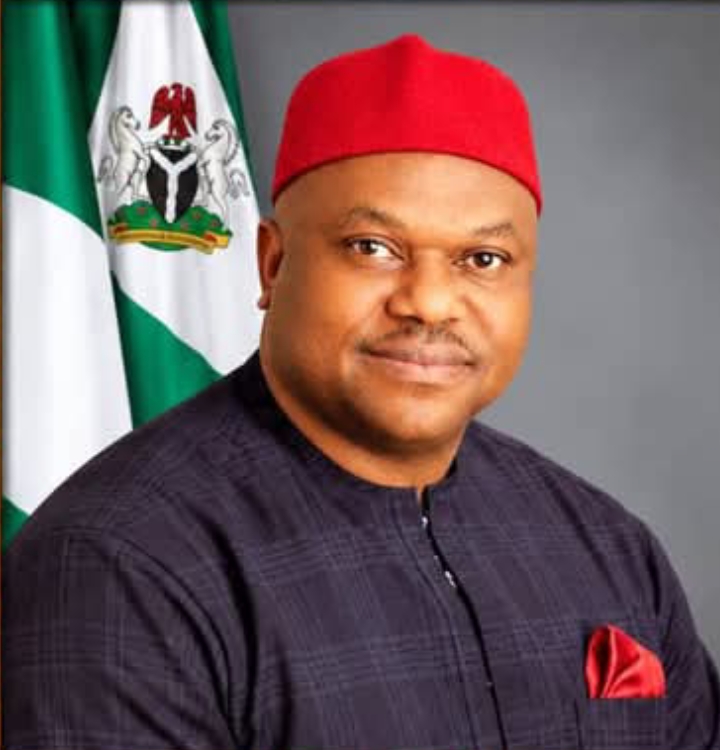
2027: Rt Hon Victor Ochei Declares Vision to Reposition Delta North Under NDC
Former Delta Speaker says Senate seat must deliver jobs, infrastructure, and youth empowerment for Anioma

ANIOCHA OSHIMILI 2027: ELUMELU’S 16-YEAR LEGACY VS NDAH’S NEW ENERGY — WHO HAS THE STRONGER CASE?
NOL24 Political Desk launches a 90-day public examination of experience, performance, vision and the future of represent...
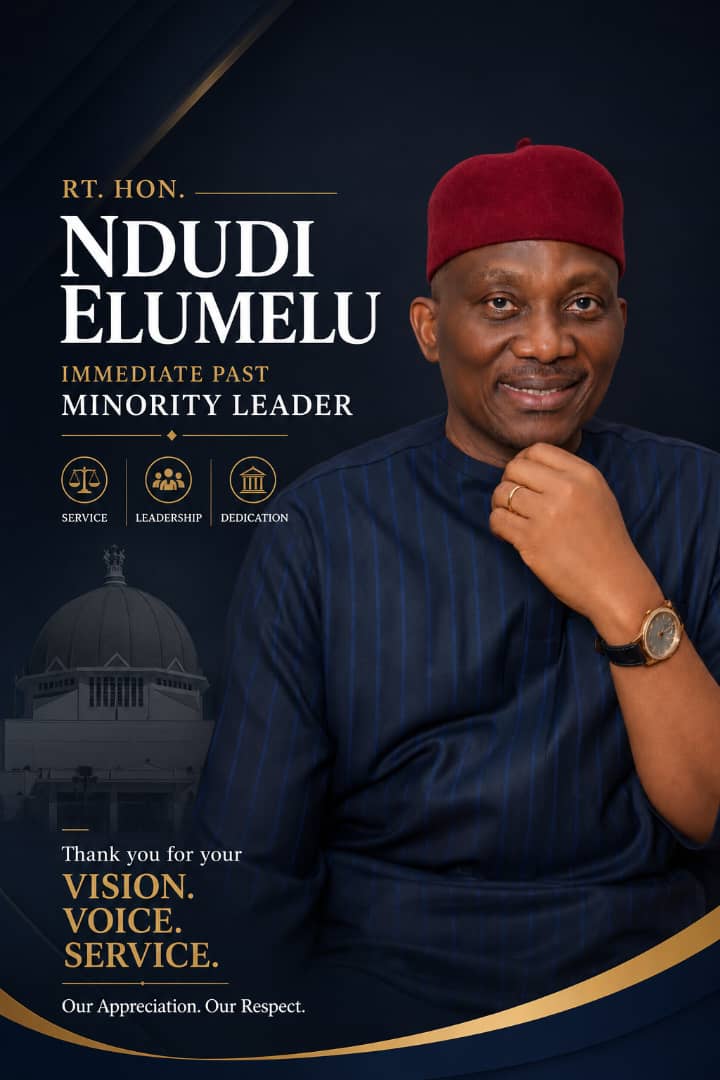
ELUMELU'S FOURTH-TERM QUEST: Can Experience and Influence Withstand the Rising NDC Wave in Aniocha/Oshimili?
By Peter Legacy and Uche Austin ASABA, DELTA STATE — The political landscape of Delta North witnessed another definin...

2027: AAC's Isaac Eshor Unveils Industrial Blueprint, Targets Maritime Revolution for
2027: AAC's Isaac Eshor Unveils Industrial Blueprint, Targets Maritime Revolution for Delta By Peter Okenyebunor The...