
By Tola O. Ajemisogbe
Delta State has steadily positioned itself as a leader in Nigeria’s economic development, using education as the primary catalyst for growth. Over the past two decades, the state’s governors have laid the foundation for this transformation, with successive administrations meticulously advancing policies that place emphasis on education to build a skilled workforce and drive economic development. From the administration of former Governor Emmanuel Eweta Uduaghan to the current leadership of Governor Sheriff Francis Oborevwori, Delta’s commitment to human capital development has been clear and unwavering.
The shift towards prioritizing education in Delta began with Governor Uduaghan’s strategic scholarship initiative, which targeted academic excellence and the pursuit of knowledge beyond Nigeria’s borders. Uduaghan introduced a scholarship program for first-class graduates in the state, providing them the opportunity to further their education up to the PhD level in any university across the world. This initiative aimed to nurture intellectual talent and equip Deltans with advanced skills, fostering a generation of highly educated professionals. His vision was to create a knowledge-based economy in which educated citizens would contribute significantly to the state’s growth and development.
Governor Ifeanyi Okowa, who succeeded Uduaghan, continued with this legacy but redefined the focus of Delta’s tertiary education. Okowa’s administration undertook the bold move of transforming key institutions in the state, starting with the conversion of the Delta State Polytechnic in Ozoro into the Delta University of Science and Technology, and elevating the former College of Education in Agbor to a university that focuses on medical sciences and related fields. These transformations were not just cosmetic changes; they were strategic refocusing efforts aimed at aligning Delta’s educational institutions with sectors that could drive technological and industrial advancements. By focusing on science, technology, and healthcare, Okowa envisioned a Delta State that could produce skilled professionals capable of filling the gaps in these critical areas, boosting the state’s industrial and healthcare capabilities.
Building on these foundations, Governor Sheriff Francis Oborevwori has taken Delta’s education-driven economic trajectory to new heights. His administration is meticulously advancing this vision through strategic initiatives that emphasize professionalism and educational accessibility. Oborevwori’s recent pronouncement of scholarships to targeted categories of individuals is a continuation of the state’s commitment to making education accessible to all. His efforts are designed to ensure that the educational landscape in Delta is inclusive, covering diverse demographics and ensuring that no one is left behind. These measures are part of the M.O.R.E. Agenda (Meaningful development, Opportunities for all, Realistic reforms, and Enhanced peace and security), which focuses on harnessing the educational potential of the state as a key driver of economic growth.
What is striking about Delta State’s education policy is how it mirrors the blueprint that fueled the rapid economic growth of the Asian Tigers—Taiwan, Singapore, South Korea, and Hong Kong. These nations recognized that education and professional skill development were critical in transforming their economies from agrarian to industrial powerhouses. In much the same way, Delta State’s investments in education have laid the groundwork for economic expansion, with the state preparing to become a hub of industrialization in Africa. The strategy to create a pipeline of highly skilled professionals, foster technological advancements, and enhance healthcare infrastructure mirrors the developmental trajectory of these Asian economies.
From the "Delta Beyond Oil" initiative under Uduaghan, which sought to diversify the state's economy away from its reliance on crude oil, to Okowa's "SMART Agenda" (Strategic wealth creation, Meaningful peacebuilding, Agricultural reforms, Relevant health reforms, and Transformation of the environment), and now Oborevwori’s M.O.R.E. Agenda, Delta State has consistently aligned its policies toward a common goal: advancing Delta through human capital development. This continuity of leadership vision ensures that the state is not just looking at short-term growth but is positioning itself as a leader in industrialization and professionalism in Africa.
Delta’s trajectory is one that is heading toward significant industrialization, driven by the strategic prioritization of education. As the state continues to produce highly skilled professionals in key sectors like technology and healthcare, it will inevitably attract investments, create job opportunities, and elevate its economic status. With this consistent focus on education as a catalyst for economic growth, Delta is on course to becoming Africa’s next industrial hub, mirroring the Asian Tigers' rise to global economic prominence.
Tola O. Ajemisogbe is a Strategic Management Researcher at the Nnamdi Azikiwe University, Awka, Anambra State, and a Political Aide to Governor Sheriff Francis Oborevwori.
Delta State Building a Strong Economic Base By Prioritizing Education~Ajemisogbe
By Tola O. Ajemisogbe Delta State has steadily positioned itself as a leader in Nigeria’s economic development, using education as the primary catalyst for growth. Over the past two decades, the state’s governors have

Related Reports

Federal Cooperative College Oji-River to empowers 100 igbuzo youths through Idowu okeze's intervention
By: Ike Philip Abiagom No fewer than 100 cooperators from Igbuzo and neighbouring communities are set to benefit from...
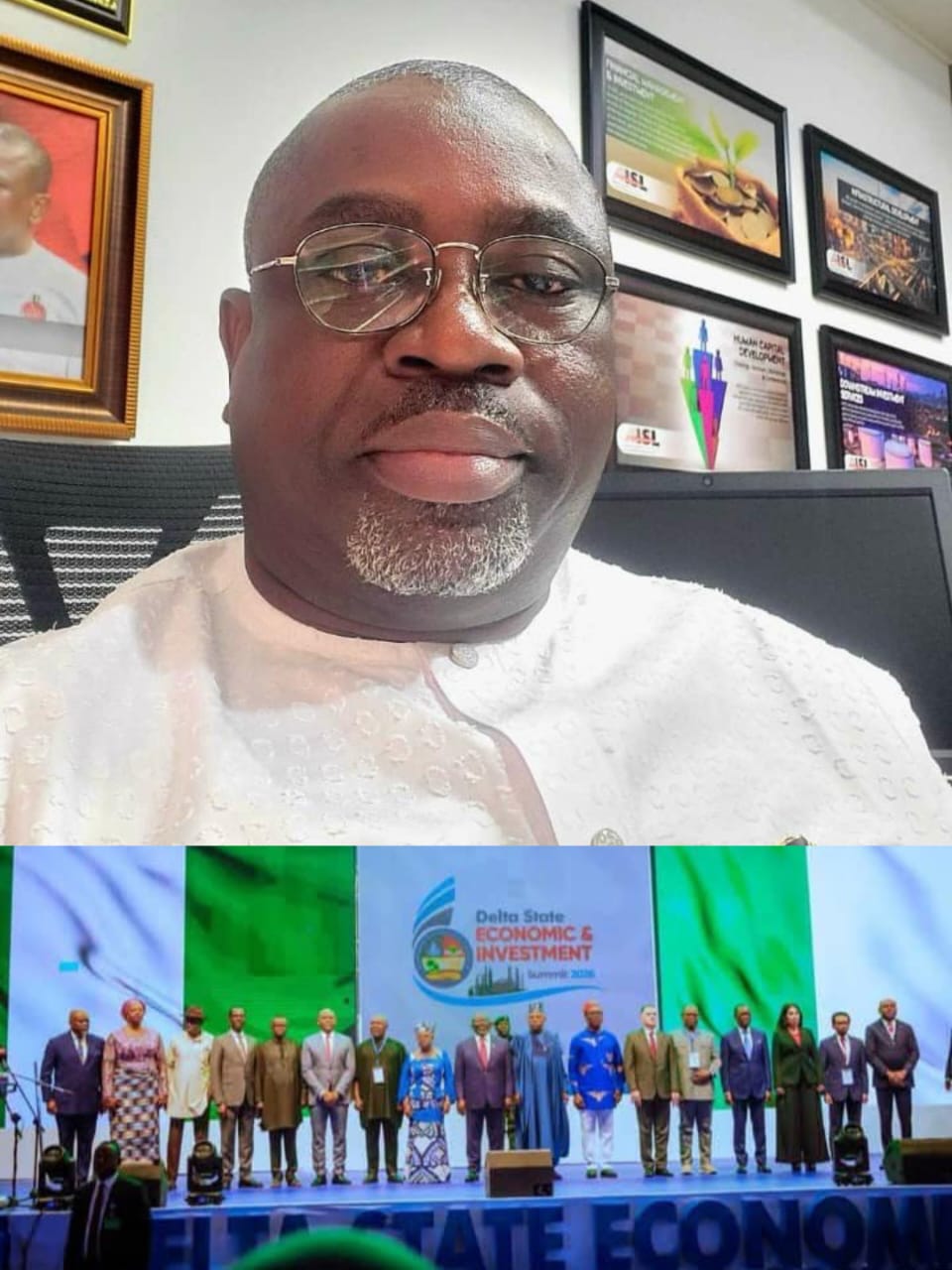
Delta Economic Summit 2026: Obire Hails Oborevwori's Visionary Leadership, Says Delta Is Poised for Greater Prosperity
Asaba, Delta State- A chieftain of the All Progressives Congress (APC), member of the Tinubu Support Group (TSG), and Co...

Delta Economic and Investment Summit: Technical Education Investments Showed Clear Development Strategy, Says Ufoh
By: The Political Desk-NOL24 Media Cathedral The Delta State Commissioner for Technical Education, Hon. Smart Ijeoma...

Delta Bleeding Amid Wealth, Economic Summit Misplaced Priority — Eshor
The governorship candidate of the African Action Congress (AAC) in Delta State, Engr. Isaac Eshor, has criticized the on...